eace and Conscience: A Speech Commemorating the Ninth Anniversary of Liu Xiaobo’s Passing
作者:趙燕濤 編輯:呂聰
各位黨員、各位來賓:
大家下午好!我是中國民主黨黨員,趙燕濤,
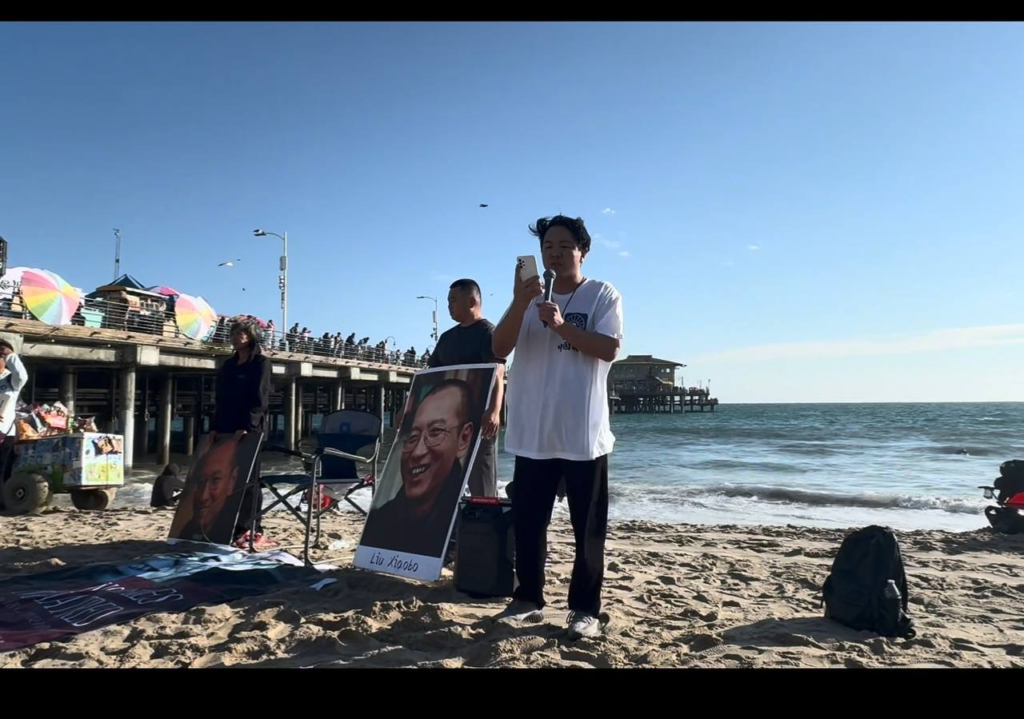
今天,我們相聚在聖塔莫妮卡海邊,共同紀念諾貝爾和平獎獲得者劉曉波先生逝世九週年。
九年前的今天,一位始終堅持和平、理性、非暴力理念的知識分子離開了這個世界。但一個人的生命會結束,一個人的精神卻可以跨越時間,繼續影響後來的人。
劉曉波先生曾經說過:“我沒有敵人,也沒有仇恨。”
這不僅僅是一句話,更是一種政治文明的體現。他告訴世人,即使面對壓迫與不公,依然可以堅持良知,堅持尊嚴,堅持用和平與理性的方式推動社會進步,而不是讓仇恨吞噬自己。
今天,我們來到海邊舉行海祭,不只是爲了緬懷一位逝去的人,更是爲了紀念一種精神。
這是一種追求自由的精神。
是一種堅持真相的精神。
也是一種相信和平能夠改變社會的精神。
歷史告訴我們,任何一個現代文明國家的發展,都離不開公民意識、法治精神以及人民對自由和尊嚴的不懈追求。真正穩定的社會,不是建立在恐懼之上,而是建立在人民能夠自由表達、依法參與公共事務、彼此尊重的基礎之上。
作爲生活在海外的華人,我們或許身處不同國家,擁有不同身份,但我們都希望未來的中國能夠成爲一個更加開放、更加法治、更加尊重每一位公民權利的國家。
這種願望,不應該建立在仇恨之上,而應該建立在責任之上;不應該建立在暴力之上,而應該建立在和平之上。
今天站在這裏,我也想向所有關心中國未來的人說一句:
無論我們的政治觀點是否完全一致,只要我們都希望中國擁有更多自由、更多法治、更多尊嚴,我們就擁有共同努力的空間。
紀念劉曉波先生,不只是獻上一束鮮花,不只是默哀一分鐘,更重要的是把這種堅持真理、堅持和平、堅持良知的精神繼續傳承下去。
也許我們每一個人的力量都很微小,但歷史往往就是由無數普通人的堅持共同推動的。
最後,讓我們共同緬懷劉曉波先生。
願他的精神,像今天的大海一樣,遼闊而深遠;像今天的海風一樣,跨越山海,吹向每一個熱愛自由、珍惜和平的人。
願未來的中國,能夠真正實現法治、公義、自由與尊嚴。
謝謝大家。願劉曉波先生安息,也願和平與希望永遠與我們同行。
Speech in Memory of Liu Xiaobo on the Ninth Anniversary of His Passing
Ladies and gentlemen, dear friends,
Good afternoon.
Today, we gather here on the shores of Santa Monica to commemorate the ninth anniversary of the passing of Nobel Peace Prize laureate Liu Xiaobo.
Nine years ago today, the world lost a scholar and advocate who remained committed to peace, reason, and nonviolent change. Although his life came to an end, the values he stood for continue to inspire people across generations.
Liu Xiaobo once said:
“I have no enemies, and no hatred.”
These words represent more than a personal belief—they reflect a vision of political civilization. They remind us that even in the face of injustice, one can choose dignity over resentment, reason over violence, and hope over despair.
Today, as we hold this memorial by the sea, we are not only remembering one individual. We are honoring a spirit.
A spirit that values freedom.
A spirit that seeks truth.
And a spirit that believes peaceful dialogue and nonviolent action are the path toward a better future.
History has shown that every modern and prosperous society is built upon the rule of law, civic responsibility, and respect for the dignity and rights of every individual. Lasting stability does not come from fear—it comes from justice, freedom, and the ability of people to participate openly in public life.
As Chinese people living overseas, we may come from different backgrounds and hold different perspectives. Yet many of us share the hope that one day China will become a country that is more open, more governed by the rule of law, and more respectful of the rights and dignity of every citizen.
That hope should be guided not by hatred, but by responsibility; not by violence, but by peaceful engagement.
Today, I would also like to say this to everyone who cares about China’s future:
Even if we do not agree on every political issue, as long as we share the aspiration for greater freedom, stronger rule of law, and greater human dignity, there remains common ground on which we can work together.
To remember Liu Xiaobo is not only to lay flowers or observe a moment of silence. It is to carry forward the principles he embodied—the pursuit of truth, the commitment to peace, and the courage to follow one’s conscience.
Each of us may seem insignificant on our own, but history is often shaped by the perseverance of ordinary people who refuse to give up hope.
Finally, let us remember Liu Xiaobo with respect and gratitude.
May his spirit be as vast as the ocean before us, reaching across borders and generations.
May it continue to inspire all who cherish freedom, peace, and human dignity.
And may China one day embrace justice, the rule of law, freedom, and dignity for all.
Thank you.